PROJECT FIELD GUIDE / TABLES
Choose wood for the whole table.
Start with how you will use the table, then make separate choices for the top, legs and frame. A dining surface, a small side table and a utility table can lead to different shortlists.
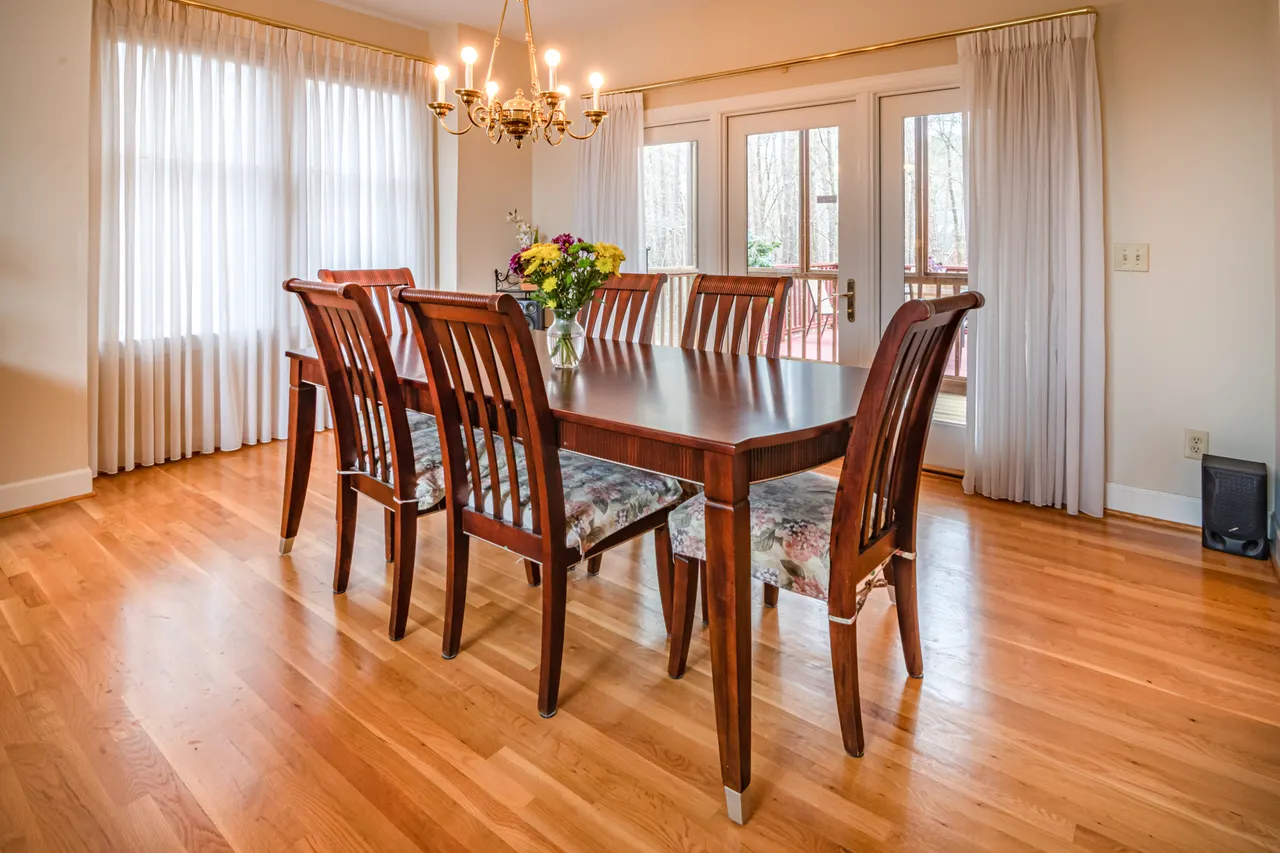
A shortlist for an indoor table
| Your aim | Consider | Decide before buying |
|---|---|---|
| An open-grained top | White oak | Select the actual boards and the sawn appearance you want. |
| A pale, fine-textured surface | Hard maple | Specify hard maple and approve the color range. |
| A naturally brown top | Black walnut | Decide whether contrasting sapwood belongs in the layout. |
| A casual or utility table | Eastern white pine or Douglas-fir | Inspect the grade, knots, dried condition and preparation needed. |
These are appearance and construction choices, not a ranking of safe spans or local prices. Use the oak vs. maple comparison to narrow a light-colored top, or compare solid wood and plywood before committing to a construction.
Choose the frame separately
Sketch where the legs and rails meet the top. Record the clearance needed for chairs, knees and any extension mechanism. Decide whether the frame should visually match the top or be painted. Price the actual joinery and prepared parts; do not assume that a suitable top material settles the leg and rail design.
Let the tabletop change width
Purdue explains that solid wood responds to humidity even after drying and finishing. The top attachment must allow that movement rather than mechanically restraining it across the grain. Review the instructions for your selected fastening system and the construction of the frame.
Record the top's grain direction and the proposed attachment method in your brief. A drawing of where parts touch is more useful than writing only “oak table.” For a veneered panel top, specify the core and edge construction instead of treating the face species as the whole material.
Test the surface you will actually use
Make a representative offcut with the planned edge treatment and finish schedule. Assess the appearance under the room lighting. Ask the coating maker about the intended use and full cure before putting the table into service. A finish sample does not validate the support design.
Take this to the supplier
- Finished top dimensions and actual thickness, plus a drawing of the frame.
- Species or exact panel product, grade and available board dimensions.
- Visible board layout, sapwood preferences and defects you will cut around.
- Milling, glue-up, edge work and transport requirements.
- Attachment hardware, finish schedule and a separate budget for each.
- A quoted buying quantity that includes your own layout and usable-yield allowance.
Use My Build Brief to keep the top and frame decisions together. For an exterior table, start with the exposure questions in the outdoor furniture guide; this indoor shortlist is not an exterior specification.
References and scope
- Purdue Extension, Daniel L. Cassens: White Oak, FNR-292-W, pp. 1–3
- Purdue Extension, Daniel L. Cassens: Hard or Sugar Maple, FNR-287-W, pp. 1–3
- Purdue Extension, Daniel L. Cassens: Black Walnut, FNR-278-W, pp. 1–2
- Carl A. Eckelman, Purdue University: The Shrinking and Swelling of Wood and Its Effect on Furniture, pp. 1–2
Reference check: October 22, 2026. GrainBench recommendations are editorial starting points, not shop-tested construction plans or load ratings. Manufacturer comparisons apply to the documented products. Check the actual stock, panel, hardware and finish.