PROJECT FIELD GUIDE / DESKTOPS
Choose the right material for your desktop.
Start with the surface you want to use every day, then plan what holds it up. The best choice depends on your finish, dimensions, support layout, and willingness to prepare the stock.
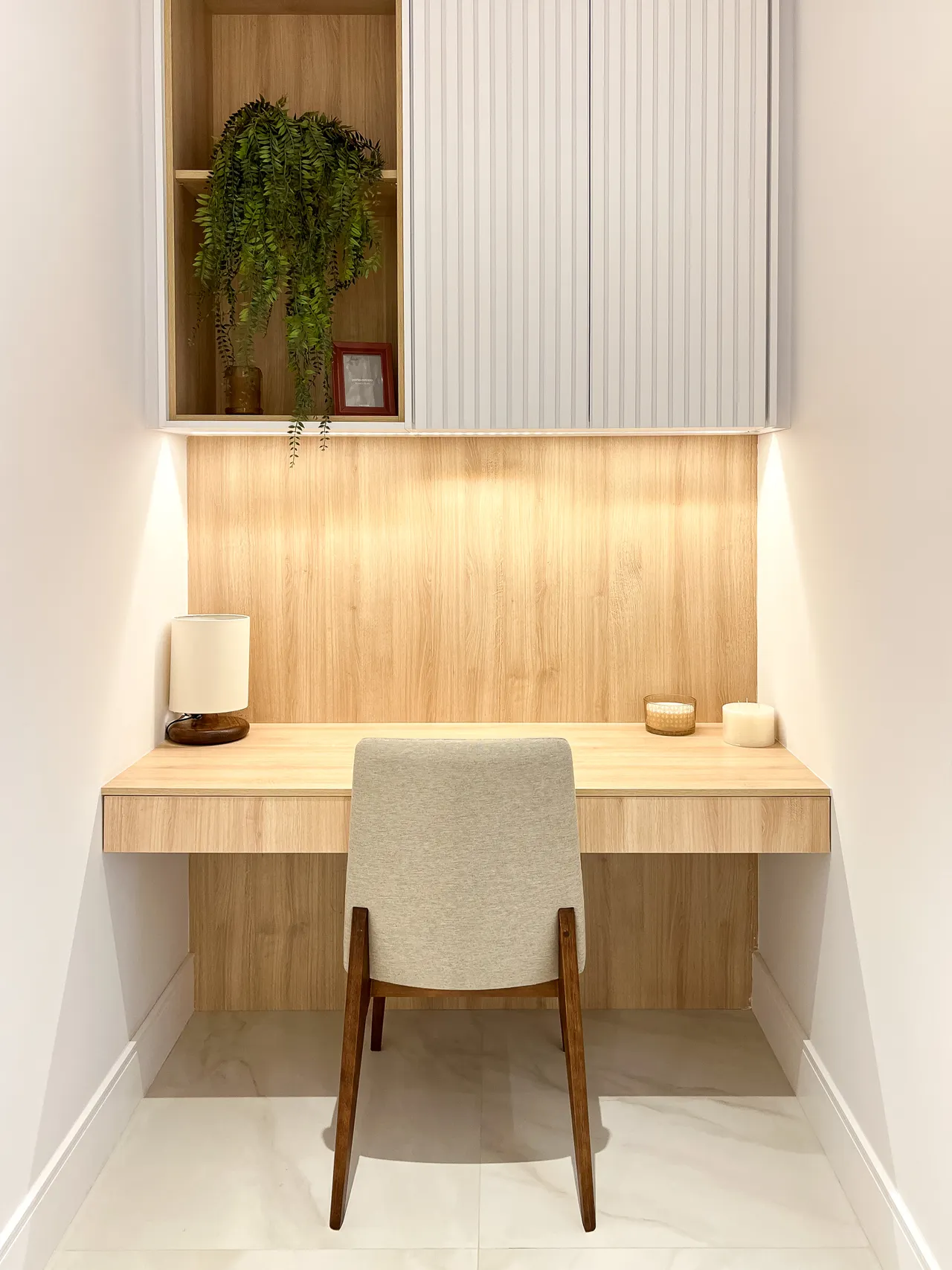
Three starting points
- A pale surface
- Consider Hard maple. Review its profile and select the visible boards together.
- Natural grain
- Compare White oak and Black walnut. Decide whether grain contrast or a darker surface fits the room.
- A panel approach
- Consider Hardwood plywood with a specified core and planned edge treatment. A face veneer name alone does not identify the whole panel.
Solid wood vs. plywood for a desk
Our editorial starting point is to compare two complete designs, rather than two prices per board. For solid wood, include milling, glue-up, and an attachment method that accommodates seasonal movement. For plywood, include edge treatment and the specified core, thickness, and face quality.
Wood movement is a design issue even after the top is finished. Purdue explains that finishes can slow moisture exchange without stopping it. Follow the selected attachment hardware’s instructions rather than fixing a wide top rigidly across its width.
Plan the unsupported span
Draw the positions of legs, cabinets, rails, and brackets. Record where the top is actually supported. List equipment and how its load reaches the top; concentrated loads, monitor arms, and a uniformly distributed load are different cases.
The shelf estimator is an educational model for a uniformly loaded, simply supported rectangular member. It does not validate a whole desktop, a cantilever, an edge clamp, or a standing-desk frame. Obtain the frame and bracket manufacturer’s limits for your chosen dimensions.
Prepare a buying brief
- Finished width, depth, and actual thickness.
- Support and attachment locations.
- Equipment positions, including clamps and cable openings.
- Species or exact panel product and core.
- Edge profile, exposed surfaces, and finish sample.
- Supplier pricing, usable yield, and transport requirements.
Does a clear finish make any wood a desk surface?
No finish choice replaces the support design or the material specification. Test the complete finish schedule on an offcut and check the coating maker’s intended use and cure instructions.
Continue with materials for painted cabinets or bookshelf planning.
References and scope
Purdue: wood movement in furniture · Columbia: plywood core guide · Columbia: paint-ready panels · Our editorial approach
Updated October 22, 2026. Material-selection guidance by GrainBench; not an engineered construction plan. Follow the documentation for the actual panel, hardware, and finish.